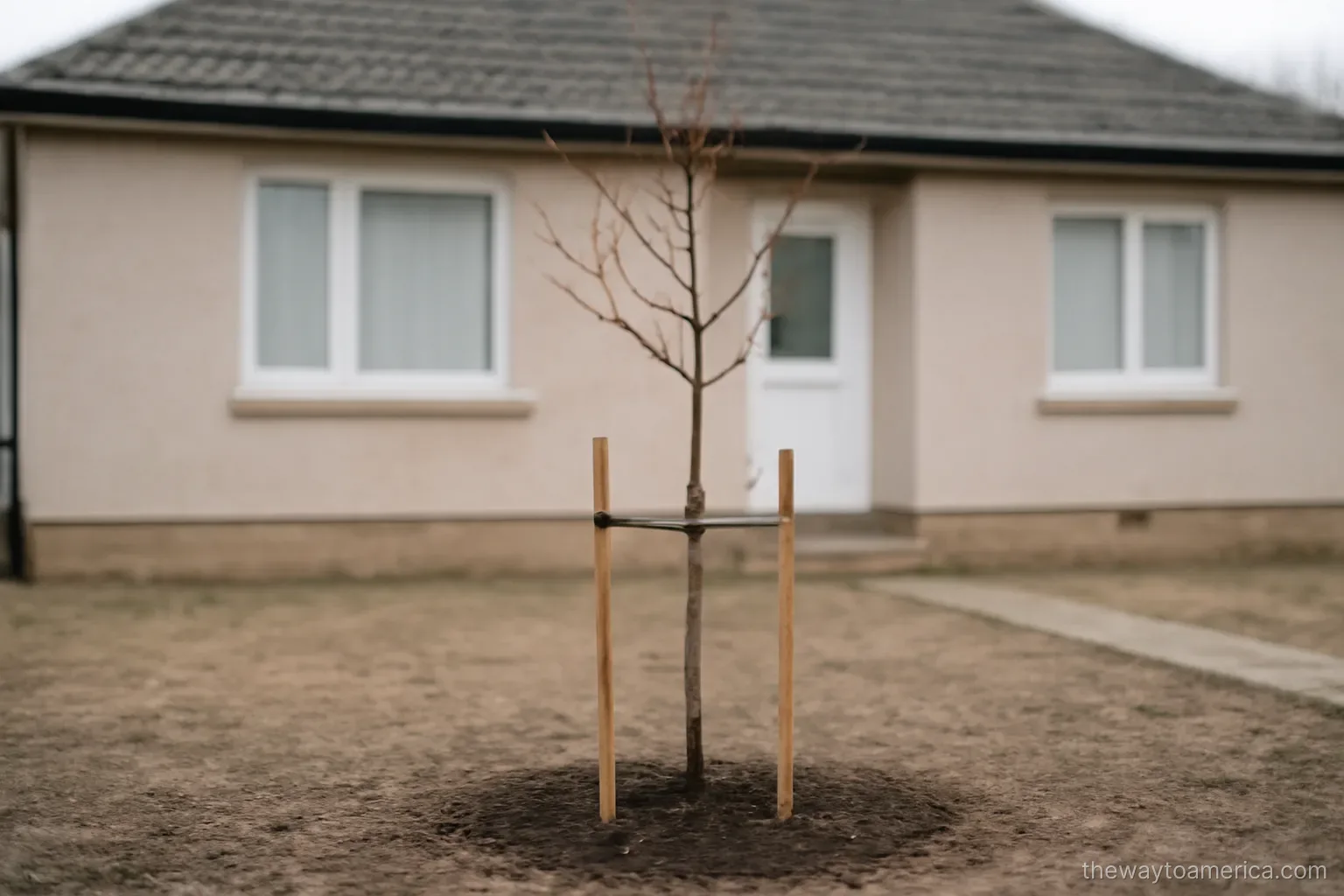
Most tasks in a new country can be shortened by effort, by asking the right person, or by being organised. A few cannot be shortened at all, because what they require is months passing.
Those are the ones to start in the first weeks, long before anybody needs them — and they are the ones families reliably postpone, because nothing is demanding them yet.
Where this sits on the timeline
It belongs to the first weeks, even though its consequences appear in year two and beyond. That mismatch is the entire point of the article, and it is the signature question of this whole site: what should be started now for a stage that is still two steps away.
How to recognise a time-dependent thing
Ask what would happen if you worked twice as hard at it. If the answer is that it would still take the same number of months, it is time-dependent.
The common characteristic is that the thing being built is a history rather than an outcome: a record of behaviour over a period, which by definition cannot exist until the period has passed.
The categories that behave this way
- A payment history. What matters is a pattern over time, and no amount of money shortens it.
- A period of employment. Both the duration and the continuity are part of what is being evidenced.
- Time in residence. Several later processes take account of continuous presence, and the clock runs whether or not anyone is thinking about it.
- Standing with an institution. Being known to a bank, an employer, a landlord or a clinic accrues.
- Language ability at a working level, which improves with exposure over months rather than with intensity over weeks.
Every one of these is invisible in month two and decisive in year two.
The practical implication
Start each of them at the smallest possible scale as early as possible, even if the scale is almost trivial.
A small obligation met consistently, a modest job held steadily, a routine kept with one institution — these are worth more than a larger version started a year later, because what is accumulating is the record rather than the size.
Starting small immediately beats starting properly later. That is the whole of the advice, and it is unglamorous enough that people ignore it.
The things that are not time-dependent, and should not be rushed
The mirror of this article is worth stating, because families overcorrect.
Buying a home, changing career, committing to a long course of study, taking on a large obligation — none of these accrue anything by being done early. They are outcomes, not histories, and doing them sooner produces no compounding benefit at all.
In fact they usually go better later, once the household knows the area, has local records to draw on, and understands what things actually cost and how they work.
So the division is clean and useful: start the histories immediately and at any size; defer the outcomes until you know enough to choose well. Families who invert this — postponing the small accruing things while rushing into a large commitment in month three — make the first year much harder than it needed to be.
What cannot be repaired by effort later
A gap. If a period passes with nothing accruing, there is no way to fill it retrospectively — the months simply are not there.
This is why the first year matters disproportionately, and why a household that spends it waiting to feel settled before beginning anything finds year two harder rather than easier.
Who acts at this stage
The person themselves, in their own name. Arrangements held in a relative's name build that relative's record, not theirs.
That distinction is easy to miss when a family is operating as one unit out of necessity in the first months. Wherever something can reasonably be in the newcomer's name, it should be, even if it is smaller as a result.
What is hard to undo at this stage
An early record of something going wrong. A missed obligation early on sits in a short history where it is very visible, precisely because there is little else in the record to balance it.
The counsel here is conservatism: in the first year, take on only what is comfortably manageable, because the record is thin and every entry weighs heavily.
What to start now for a stage two steps away
Two things that pay off years later and cost almost nothing now.
A travel log. Every departure and return, with dates. Later processes ask about absences, and nobody reconstructs several years of travel accurately from memory.
A filing habit. One place where every official letter, notice and document goes, in date order. Year one is when this is easy to start and year four is when its absence hurts.
The mindset that makes the first year survivable
Think of the year as planting rather than harvesting. Almost nothing started now shows a result within it, and that is not a sign of failure — it is the nature of what is being built.
Households that understand this judge their first year by what was begun rather than by what was achieved, and they arrive at year two with a great deal quietly in progress.
How do we know if something is time-dependent?
Ask whether working twice as hard would shorten it. If it would still take the same number of months, it is a history being built rather than a task to complete.
Which things accrue with time?
Payment histories, periods of employment, time in residence, standing with institutions, and working-level language ability.
Is it better to start small now or properly later?
Start small now. What accumulates is the record rather than the size, and months that pass with nothing accruing cannot be filled in retrospectively.
Whose name should things be in?
The newcomer's, wherever reasonable. Arrangements held in a relative's name build that relative's record rather than theirs.