Two things about this step surprise almost every family. You do not choose the doctor, and you generally do not receive the findings. Both follow directly from what the examination is for: it is evidence for a government decision, not a service being provided to you.
Why the physician is designated rather than chosen
The examination has to be performed to a defined standard, against criteria set by health authorities, and reported in a specific way to a specific recipient.
That only works if the examiner is part of the arrangement. Physicians designated for this purpose have been authorised to perform these examinations and to report them through the proper channel — which an excellent doctor with no such designation simply cannot do.
This is why an examination done outside that arrangement has no value to the case, however thorough it was. It is not a question of quality. It is a question of who is authorised to produce this particular document.
How to find out who is designated
The list is published for each location by the relevant U.S. embassy or consulate, and the instructions issued for a case point to it.
Take it from that source and nowhere else. Lists circulated by agencies, relatives or forums go out of date, and a designation can change. An afternoon spent confirming this against the official list is the cheapest afternoon in the whole process.
Who acts at this stage
The relative abroad books and attends. They should expect to bring identification, whatever the instructions specify, and their vaccination history.
If there are several people in the case, each person is examined. Arrangements for children and for elderly relatives differ in practice — what is required depends on the person, and the clinic will say when the appointment is made.
The American side's contribution here is preparation rather than presence: making sure the person going knows what to bring and has it physically with them, rather than at home in a drawer.
Where the result goes
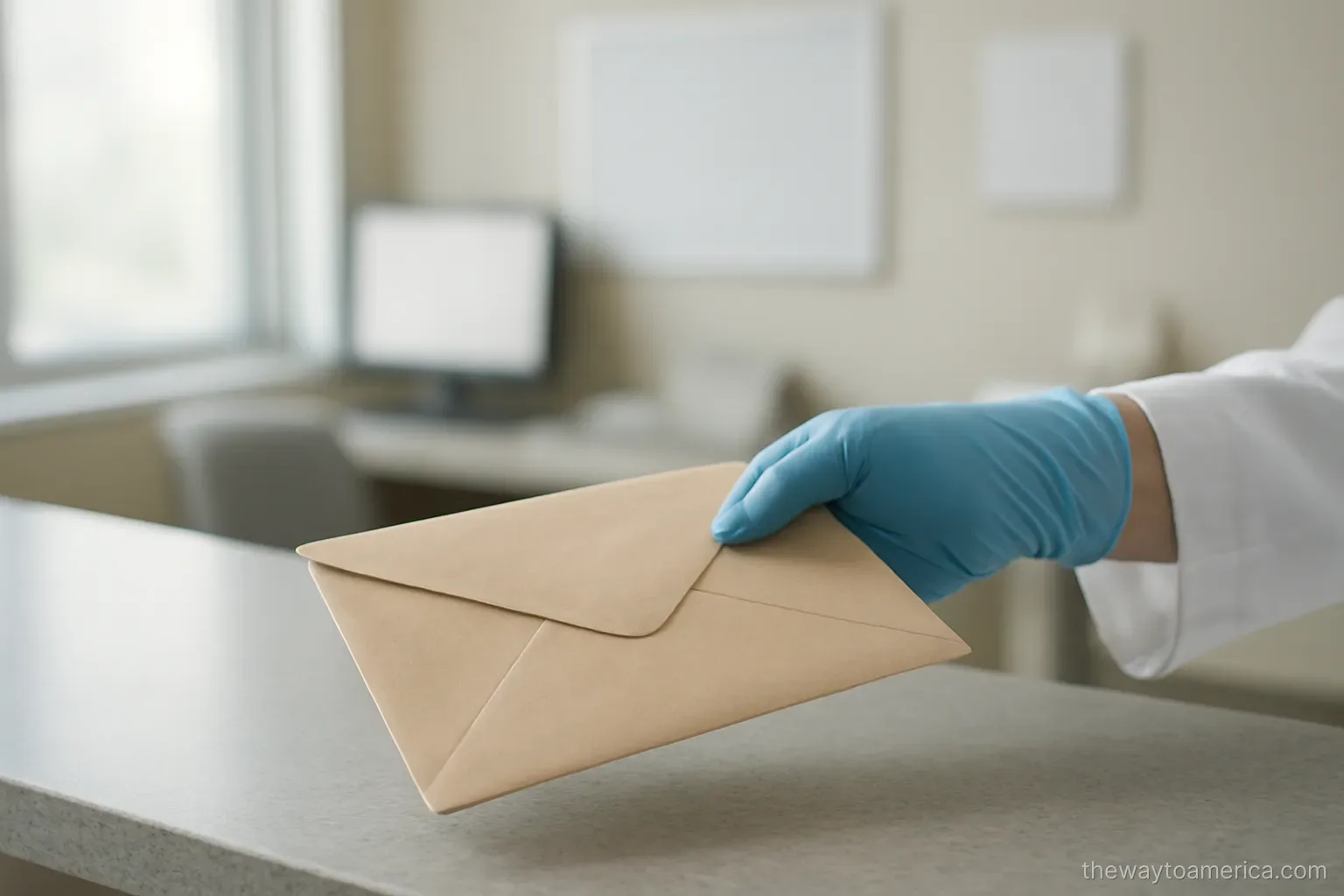
To the office deciding the case, through the channel established for that purpose. Depending on the arrangement at a given location, some materials may be handed over sealed and must reach the interview unopened.
That last point matters and it is easy to get wrong in a moment of curiosity: if something is given to you sealed, it stays sealed. An opened envelope can invalidate what it contains.
Applicants generally do receive certain things for their own keeping, and what those are depends on the location and the arrangement. The instructions from the clinic on the day are the authority on this — listen to them, and write down what was said.
What you should keep for yourself
Regardless of what is transmitted officially, one thing is worth having in your own hands afterwards: a record of what vaccinations were administered, when.
This is not for the immigration case. It is for the years after arrival, when schools, employers and doctors in the United States ask for a vaccination history and there is no way to reconstruct one that happened at a clinic abroad.
Ask at the clinic what you may keep, keep it, photograph it, and store the photograph somewhere the family can reach. A later chapter of this site explains why this small piece of paper saves a great deal of trouble during the first year.
What is hard to undo at this stage
Three things, all mundane and all expensive:
- An examination by a non-designated physician. The money and the time are gone; the examination must be done again properly.
- A sealed package that was opened. It may have to be reissued, which means going back.
- Attending without what was required. Turning up without the documents or history the instructions specified usually means a second appointment.
None of these damages a case on the merits. They cost weeks, and weeks at this stage are painful because everything else is finally moving.
What to start now for a stage two steps away
The interview usually follows this step closely, and the person attending it will be carrying documents.
Use the medical appointment as a rehearsal for that: assemble everything in one folder, decide who carries it, and confirm that the originals are in the country where they will be needed rather than in a relative's house in another one.
Families discover surprisingly often, at exactly this point, that an original document is on the wrong side of the world.
Questions this site will not answer
What the examination covers medically, which vaccinations apply to a particular person, whether any exception applies to a particular condition, and what a particular finding means.
Those belong to the examining physician and to the relevant health authorities, and they depend on the individual. Anything about how a health matter affects the case itself belongs to a licensed immigration attorney.
What this site can say is the part that is structural and stable: go to a designated physician, go when instructed, bring what was asked for, keep sealed things sealed, and keep your own record of what was given.
Why can't we use our own doctor?
Because the examination must be performed and reported by a physician designated for that purpose. An examination outside that arrangement cannot be reported through the proper channel and has no value to the case.
Where do we find the list of designated physicians?
It is published by the relevant U.S. embassy or consulate, and the instructions issued for the case point to it. Do not rely on lists circulated by agencies or forums.
Can we open a sealed package to see what it says?
No. If something is handed over sealed it must reach the interview unopened, and an opened package may have to be reissued.
What should we keep for ourselves?
A record of what vaccinations were administered and when — not for the case, but for schools, employers and doctors in the United States during the first year.